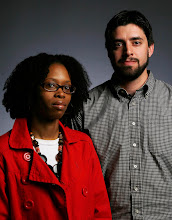
The Montgomery Advertiser newspaper's blog on all things related to Alabama politics and state government, featuring the writings of Sebastian Kitchen and Markeshia Ricks
Wednesday, March 9, 2011
Democrats announce legislative agenda
Democrats in the Alabama Legislature rolled out their agenda on Wednesday, saying their platform is a handshake with working people and not with big corporations. They were taking a dig at Republicans, who are pushing through bills from their Handshake with Alabama, a list of campaign promises from the 2010 election. This is the first regular session in which Democrats will be trying to pass their agenda as a minority. About two dozen Democrats were in the House chamber on Wednesday to share their goals. Their agenda includes online filing of campaign finance forms and creating a searchable database; trying to curb the purchase of medication used in making methamphetamines; fighting distracted driving; creating tax incentives for existing and potential industries using millions of dollars from revenue from offshore oil and gas; and eliminating tax loop holes for out-of-state corporations that Democrats believe are costing the state millions in revenue. Some of their goals are ones they had difficulty passing while they were in the majority including removing the state portion of the sales tax off of groceries, and rewriting the state's 1901 constitution. Senate Minority Leader Roger Bedford, D-Russellville, and House Minority Leader Craig Ford, D-Gadsden, acknowledged that Democrats have been run over in the Alabama Senate. During the special session and so far in this session, Senate Republicans have quickly shut down any effort by Democrats to debate issues and moved to quickly vote on issues. Ford said they hope, like they did with one bill during the December special session, that they will be able in the House to peel away some Republicans to vote with them on some issues. State Rep. John Knight, D-Montgomery, said he is continuing his fight to remove the 4 percent state sales tax on groceries. He said he is open to talking to anyone with suggestions of how to replace that revenue. Republicans oppose replacing the revenue by stopping Alabamians above a certain income level from deducting the federal income tax they pay from their state income tax. Bedford is pushing a resolution that would allow people to vote in the June 2012 party primaries on whether they want the constitution rewritten by convention, which would be conducted later by a man and woman elected from each House district. State Rep. Richard Lindsey, D-Centre, plans to introduce bills that he believes would close the loopholes for out-of-state corporations that compete with corporations headquartered here. Also, with the state needing revenue for education, Lindsey said the state is losing out on $100 million in revenue because of the loopholes. Bedford and Rep. Napoleon Bracy, D-Prichard, said Sudafed is a main ingredient in methamphetamines and said people are crossing the border from Mississippi to purchase it so they want to make Sudafed a Class III drug, which would only allow it to be purchased by prescription. Rep. Joe Hubbard, D-Montgomery, has introduced a bill that he believes would create greater transparency through online filing of campaign finance forms.
Democrats in the Alabama Senate attempted to delay a vote on the bill that would kill a retirement program the state started to keep quality longtime employees, especially teachers, from retiring or leaving for other states, but Republicans quickly shut down debate. On Tuesday, Republicans approved the bill repealing the DROP program or Deferred Retirement Option Program on a 23-12 vote. The DROP program allows state and education employees who are 55 years old and have 25 years of service to receive salary and retirement benefits while continuing to work. The bill now goes to the Alabama House of Representatives for consideration. Democrats in the Senate had also pushed for an amendment that would allow people to continue to enroll until the end of the fiscal year, Sept. 30, instead of ending enrollment April 1, but that died 19-16. Senate Minority Leader Roger Bedford, D-Russellville, said some people have "been counting" on the program for years. Republicans argued the "luxury" retirement plan was too costly during these tough financial times, an argument that Democrats object to. Bedford said the state would save from not having to pay benefits for the DROP enrollee and a new hire.
Democrats in the Alabama Senate are calling the attempt by Republicans to stop the DROP retirement program a punitive attack on teachers and state employees hidden behind the guise of saving money. Senate Minority Leader Roger Bedford, D-Russellville, said that Republicans in the regular session, like they did in the special session on ethics, are bringing up a bill that would hurt teachers and state employees as the first proposal they consider. During the special session, the first bill considered and passed by the new Republican majority stopped politically active associations that represent teachers and state employees from collecting their dues through the state's automatic payroll deduction system. The Deferred Retirement Option Program or DROP program allows state and education employees who are 55 years old and have 25 years of service to receive salary and retirement benefits while continuing to work. The program was passed in the hope that it would discourage valuable employees from taking early retirement. State Sen. Hank Sanders, D-Selma, said the intent of DROP was to slow teachers leaving Alabama for other states. Projections from the Legislative Fiscal Office and others put the savings to the state for repealing DROP between $35 million and $70 million. Republicans believe the "luxury benefit plan" needs to be repealed during these tough financial times. "DROP is simply an added luxury that public employees enjoy, but the state does not have the resources to continue funding luxuries while cutting the budgets for the necessities. I believe the people of Alabama can understand that logic," said Senate President Pro Tem Del Marsh, R-Anniston. "It's the same logic that they follow when making financial decisions that impact their families - it's simply common sense budgeting." Bedford said the purpose is "not to save money, but to punish them because a disproportionate number of them chose to vote for Gov. Robert Bentley over not-Gov. Bradley Byrne" The Alabama Education Association supported Bentley, then a two-term state legislator, over Byrne, former chancellor of the state's junior college system who was supported by some of the state's most prominent Republicans, in that party primary. Sen. Quinton Ross, D-Montgomery, said the bill is an attack on teachers and state employees.
Senators propose pay cut if budgets goes into proration
A bipartisan group of state senators said Tuesday they support a resolution that, beginning with the next state budgets, would cut the pay of state legislators equal to the level of budget cuts declared by the governor. Some Republicans who slammed a 2007 pay raise that lawmakers voted for themselves do not believe the resolution goes far enough. Senators who support the resolution said the measure was intended to encourage legislators to try to accurately balance the budgets. Gov. Robert Bentley, a Republican, announced Monday that he was immediately declaring 3 percent proration in the current education budget and would soon declare 15 percent proration in the current General Fund budget, the source of funds for most non-education functions of state government including Medicaid, prisons, and public safety. State law requires the budget to be balanced so the governor must declare proration, or across the board cuts, to balance revenue and spending. If the resolution proposed on Tuesday passes, lawmakers' pay would be cut at the rate of proration beginning with the next budget year, which starts Oct. 1. The proposal would not affect the current fiscal year. Sen. Paul Sanford, R-Huntsville, said he proposed the resolution because unrealistic budget forecasts hurt agencies and state employees, but legislators are not feeling the pain. As a small businessman, Sanford said "when my employees feel the pain, I feel the pain." He said this would be an incentive for lawmakers to be more cautious when assembling the budgets. Lawmakers were asked why not make the resolution effective this budget year. "There (are) many people in these chambers who didn't have anything to do with these budgets," Sanford said. Senate Minority Leader Roger Bedford, D-Russellville, a former budget committee chairman, said the resolution would give more accountability to the budget process. Senate President Pro Tem Del Marsh, R-Anniston, said he does not feel the support is there to roll back legislative pay levels to 2007, when lawmakers passed a more than 60 percent pay raise for themselves as one of their first acts of business. He believes the issue could bring the Senate to a stalemate. Marsh said any legislator who wants to turn down their pay raise can do so. But some legislators want the pay level taken back to the 2007 level and want to remove the automatic cost of living increase that lawmakers included in that increase. Republican Sens. Gerald Dial of Lineville and Bryan Taylor of Prattville want to roll back the pay increase. Taylor said he has not seen a draft of the resolution, but understands "where some of my colleagues are coming from, particularly the freshmen." He said some of them took pay cuts and took jobs in the private sector to run. "Many of us were not here in 2007," Taylor said. But Taylor said he continues to support a repeal of the pay increase. "I think the pay raise in 2007 was wrong," he said. Taylor said any resolution cutting back pay "is a step in the right direction." Marsh said the joint support for the resolution sets a good tone for the legislative session, which started Tuesday.
The Alabama public, political observers and Alabama state senators found out Tuesday who will chair key committees in that body. Sen. Scott Beason, R-Gardendale, who is considered one of the most conservative members of the Senate, was selected as chairman of the powerful Rules Committee that determines which bills come to the Senate floor for debate. He succeeds powerful Sen. Lowell Barron, a Democrat who lost in the November election. Sen. Arthur Orr, R-Decatur, will be chairman of the Senate general fund budget committee which sets funding levels for Medicaid, prisons, public safety and most other non-education entities in the state. Sen. Roger Bedford, D-Russellville, the previous chairman of the committee, will serve as a minority member. Sen. Trip Pittman, R-Montrose, will preside over the education budget in the Senate. The former chairman, Sen. Hank Sanders, D-Selma, will continue to serve on the committee. The House did not announce committee assignments on Tuesday, although Rep. Jay Love of Montgomery and Rep. Jim Barton of Mobile are expected to serve as the chairmen of the House education and general fund budget committees, respectively.
At just before 3 a.m. Thursday, the Alabama Legislature passed sweeping changes to the Alabama ethics law that would limit spending by lobbyists, but also open the door for spending by other people and at other events.
House and Senate members concurred on changes to a bill sponsored by state Sen. Bryan Taylor, R-Prattville, that is much changed from the original version that he introduced at the beginning of the special session called by Gov. Bob Riley to overhaul ethics laws in the state. It's even different from the two substituted versions of the bill that moved through the Legislature.
Taylor's original bill would have capped spending by lobbyists to $100 per year and required them to report everything that they spent. The first substituted version of the bill, which was crafted by state Sen. Scott Beason, R-Gardendale, would have kept lobbyists from spending anything, but would have allowed those who hired lobbyists, or principals, to spend up to $250 a day before they had to report it. The second substitute of the bill would also have stopped lobbyists from spending anything to influence lawmakers, but would have capped what principals could spend at $100.
If the governor signs the version of the Taylor bill that is coming to his desk, lobbyists can spend up to $150 a year, and principals, which currently don't exist as a defined class under the law, could spend up to $250 a year.
"Nobody can argue you had $250 per day that was brought down to $250 a year," Senate President Pro Tem Del Marsh, R-Anniston, said of lobbyist spending on public officials.
However, there is no cap on spending at an "educational function or widely attended event," where people can provide "hospitality, meals, and other food and beverages" to public officials. A widely attended event is one with more than 12 people.
Taylor said the law would still include the existing portion requiring any expense over $250 a day to be reported. He said it also stops unlimited hospitality, lodging, and travel for purely social reasons. So, there would still be no reporting of spending on public officials under $250 a day and that would not pertain to certain events.
The bill passed Thursday does not include its own reporting requirement, which was included in the original version. Marsh said they did not see the need for the reporting since the cap was so low. He said they could add in a reporting requirement later if people believe it is an issue.
Taylor said the version they passed restored some of the strongest portions of his original bill. He had said the first version of the bill passed by the Senate created a "huge loophole."
Marsh said he expects the seven ethics bills passed in the last three days to change how people conduct business in Montgomery. He expects the bills, like the one passed early Thursday, to curb the cozy relationships between lobbyists and lawmakers.
Marsh expects their action to limit some of the "wining and dining" of legislators.
Marsh said the Business Council of Alabama, whose President William Canary was at the State House until early Thursday, expressed concerns about the bill. But, he said, no lobbyists were allowed in the conference committee meeting between House and Senate members and he told BCA officials that they were not changing the bill after the committee met.
Senate Minority Leader Roger Bedford, D-Russellville, said he believes the passed bills give the state the most accountable, transparent government in the country.
The Legislature wrapped up the special session called by Riley at about 3 a.m. Thursday after passing the seven bills he was pushing.
-- posted by Markeshia Ricks and Sebastian Kitchen
The Alabama Senate, unlike the House of Representatives, quickly passed a bill that could hurt organizations that represent educators and state employees on Wednesday. The bill, which would stop the state from taking dues out of checks for organizations like the Alabama Education Association and the Alabama State Employees Association, now goes to Gov. Bob Riley for his signature. Senate Republicans quickly shut down debate, taking a vote 45 minutes after convening. The House spent 15 hours debating the bill on Tuesday and early Wednesday. The Alabama House of Representatives passed the bill 52-49 at about 3 a.m. Wednesday. The bill would stop the state from deducting dues or funds for political action committees from state pay checks for organizations that are politically active including the AEA and the ASEA. Republicans have said that state resources should not be used to collect dues for organizations that are politically active. Democrats believe the bill is politically motivated and aimed to hurt the AEA, which typically supports Democratic candidates. The association is a force in state politics and the bill could hurt its financial resources. Senate Minority Leader Roger Bedford, D-Russellville, said the bill is targeted at the AEA because that organization supported Robert Bentley in the Republican primary instead of Riley's candidate of choice, Bradley Byrne. He said it is one of the most political bills he has seen since he was first elected to the Legislature in 1982. Paul Hubbert, head of the AEA, agrees with Bedford and believes the bill is retaliation. The AEA traditionally supports Democratic candidates for the Legislature and other state offices including governor. Hubbert and legislative Democrats are concerned that, if these organizations are not able to automatically withdraw dues from state checks, that it could cut the number of employees who are members and hurt the representation those groups have at the State House. They have said some members of these groups, such as custodians and bus drivers, might not have checking accounts and be able to send in their dues.
The state Senate started fighting late Tuesday over appointments recommended by Gov. Bob Riley to serve on boards, commissions and other state panels. The Senate shut down and eventually adjourned after getting bogged down late Tuesday over the appointments. Senate Minority Leader Roger Bedford, D-Russellville, said Riley has had eight years to make appointments and that he is trying to push through political appointments in the last hours of his administration. He said there are about 60 pending confirmations. "The truth is Governor Riley's term is over," Bedford said, before commending Riley for some of his work in the last eight years. Even though he has friends who are on the list of appointees, Bedford said the appointments should be made by Gov.-elect Robert Bentley, a Republican. He said the new governor is able to "make his mark" through his appointments. Riley is also a Republican. "Bob Riley is the governor until Jan. 17," said Sen. Arthur Orr, R-Decatur. Orr said the appointments to the Alabama A&M Board of Trustees "hang in the balance." Bedford also argued that those appointments, which require confirmation by the Senate, did not belong in a special session about ethics. "This has nothing to do with ethics," Bedford said. Orr said they need to appoint a fifth member to the Alabama Ethics Commission to ensure there is a full panel. Senate President Pro Tem Del Marsh, R-Anniston, said the Republicans have the votes to move forward with the confirmations, but had offered to move forward with just some of those appointments agreed on by the Democrats. "The votes are there to approve all of them, but we want to compromise," Marsh said. Orr added: "the olive branch was extended and it was rejected." Sen. Rodger Smitherman, D-Birmingham, said the appointments process has not always reflected the diversity of the state.
Senate Democrats criticized their Republican colleagues for beginning Friday's business considering a bill that would stop the state from taking out dues for organizations and political action committees. Some organizations of teachers, state employees, and public safety officers opposed the bill, believing it would hurt them. Republicans believe that state resources should not be used to collect dues for organizations that are often politically active. Democrats believe the bill is targeted at the Alabama Education Association and the Alabama State Employees Association. Paul Hubbert, head of the AEA, believes his organization is being attacked because it supported Robert Bentley in the Republican primary and fought against Bradley Byrne, who was the choice of several prominent Republicans including Gov. Bob Riley. Riley, a Republican, called a special session that started Wednesday for lawmakers to address ethics. Senate Minority Leader Roger Bedford, D-Russellville, encouraged his colleagues to switch the first and last bills on the agenda for Friday so they would take up the ethics overhaul first and the "punish AEA Bradley Byrne Relief Act" last. Bedford said if they were truly addressing ethics in this session then they should address that and then get to the ban on automatic payroll deduction if there is time. Democrats said the payroll deduction is not an ethics issue. Senate President Pro Tem Del Marsh, R-Anniston, said it is about ethics because state resources should not be used to collect those dues. He said Republicans have the vote to pass the bill today in the Senate.
The Senate Democratic Caucus has selected Sen. Roger Bedford, D-Russellville, as its minority leader, according to a press release from Bedford Wednesday.
"I am honored to have been elected by my colleagues to serve as minority leader," Bedford said in a statement. "The Democratic Caucus looks forward to working with the new administration to achieve strong ethics reform and to continue to ensure the well being of all Alabamians by creating new jobs and fighting to protect our children and seniors during these tough economic times."
Bedford is formerly the powerful chairman of the Senate committee that crafted the state's General Fund budget.
Republicans took control of both chambers of the Alabama Legislature for the first time in 136 years on Nov. 2.
ALGOP releases ad attacking Democratic aristocracy
The Alabama Republican Party, as part of its Campaign 2010 to try to take control of the Legislature from Democrats for the first time in more than a century, released the following web ad, which features images of Sens. Roger Bedford, Lowell Barron and Zeb Little, House Majority Leader Ken Guin and Rep. Terry Spicer:
A prominent Democrat declared a movement to pass a bill that would tax and regulate gambling in the state "over." Sen. Roger Bedford, D-Russellville, and other Democrats did not muster the 21 votes needed to formally bring up the legislation for debate on Wednesday. They were three votes short. "I think this issue is over," he said. Some other supporters of the legislation were more hopeful. Sen. Paul Sanford, R-Huntsville, said he planned to draft and introduce legislation that would be a straight up or down vote on whether people want electronic bingo. Fellow Republican Scott Beason of Gardendale has already introduced legislation that he said would allow people to vote on whether they want gambling before deciding how to govern it in Alabama. Bedford, the sponsor of the legislation they voted on Wednesday, said people lost their right to vote on Wednesday and thousands of people have lost their jobs in recent weeks as casinos in Alabama have closed. Several Republicans said the legislation before them on Wednesday was corrupt and gave monopolies to casino operators in the state.
A powerful state senator said he and his Democratic colleagues will consider shutting off debate on Thursday on a bill that would use $1 billion over 10 years to improve roads and bridges. Sen. Lowell Barron, D-Fyffe, said they might stop debate and try to move forward with a vote if they do not believe the Republicans are serious about moving forward on Thursday. The Senate has debated the bill for three business days, much of it slowdown tactics by Republicans, and is expected to continue debate on Thursday. If the Legislature passes the bill, people would vote on whether they wanted the program in November and the work could begin in 2011. Republicans have concerns about taking $100 million a year for 10 years from the Alabama Trust Fund, royalties the state receives from oil and gas. Some of the money is used for the General Fund budget. "I just don't think now is the time to jeopardize the trust fund or the savings account of the state of Alabama," said Sen. Del Marsh, R-Anniston. Sen. Scott Beason, R-Gardendale, said it makes sense to leave the money and live off of the interest. If money is pulled out, he said there are millions and millions of dollars in interest the state will never see. Sen. Larry Means, D-Attalla, plans to introduce an amendment that would place a floor at $2 billion, which would automatically halt the program if it reached that level and keep it parked until the principal climbed back above $2 billion again. Sen. Ben Brooks, R-Mobile, believes the floor should be at least $2.5 billion and took up much of Tuesday afternoon discussing his proposal. Barron, chairman of the committee that decides which bills come to the Senate floor for debate, thought they might vote on Tuesday. He said he had concerns about voting cloture, or shutting down debate, because it often creates hard feelings, which he did not want so early in the session. Barron, the Senate sponsor of the bill, said they have the 21 votes necessary to pass the bill in the Senate and he expects at least 25 votes. The House sponsor of the bill is Rep. Billy Beasley, D-Clayton. Barron, Beasley, and about a dozen other senators joined road builders for a Tuesday press conference between the State House and large equipment the builders parked along South Union Street. They called on Republicans to stop delaying. Beasley said the work would make Alabama roads and bridges safer. Barron said the bill is more important now with unemployment at 11 percent. He said about as many people are underemployed. Lee Gross of Ozark Striping Company, which he said has 125 employees, said the unemployment rate in the construction industry is 18 percent. State Sen. Roger Bedford, D-Russellville, said people could already be working if Republicans did not kill the bill a year ago. Beasley and Barron said the bill would create 30,000 jobs, a number Republicans have disputed. Supporters of the bill said the job creation information is from the Federal Highway Administration. Marsh said that would equate to workers making less than $2 an hour. State Sen. Larry Dixon, R-Montgomery, said the trust fund should be "sacrosanct" and the principal of the money should not be touched because revenues are is used for corrections, public health, and public safety. "When you're having trouble funding government, you deplete one of the major sources by depleting the trust fund," he said. Dixon is concerned that the money will be discretionary and handed out to friends of Democrats. The senator said the bill is the "biggest pork project ever." He said there is language to diminish some of that discretion, but that projects will be line-itemed in the General Fund. The appropriation, according to the bill, "may be made in either the general appropriation act or a separate appropriations act." Dixon believes that puts the discretion in the hands of the General Fund budget committee. "No committee in the Legislature ought to have that discretionary money," he said. While the money will be directed to projects in cities, counties and congressional districts, Dixon said no language in the legislation states that the money will be turned over to local governments. Barron said there is not language that would make the money discretionary. He said most of it would go to the Alabama Department of Transportation or to local governments that would spend it. "They make decisions on how that is spent," Barron said. Seventy-five percent of the money would go to the Alabama Department of Transportation and 25 percent would go to cities and counties. Barron and Bedford criticized proposals by some Republicans, one by Marsh and one by gubernatorial candidate Tim James, that would allow counties to increase their gas tax and that would use bonds to fund construction, respectively. They called those terrible ideas that either increases taxes or increased the state's debt.
South Union Street is the blog of Montgomery Advertiser political reporters Markeshia Ricks and Sebastian Kitchen. Always check here for the latest on the Legislature, elections and other activities and players in Alabama.

 te corporations that Democrats believe are costing the state millions in revenue.
 hat revenue.
 te corporations that Democrats believe are costing the state millions in revenue.
 hat revenue.